A St. Louis Clinic Built to Be There When Patients Need It
Dr. Daniel Bekele runs North City Urgent Care 13 hours a day, six days a week, blending walk-in access with the continuity of primary care.

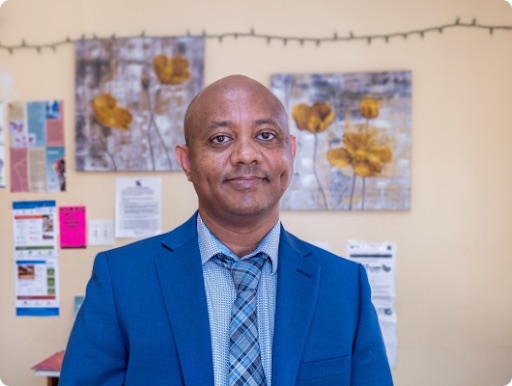
Most days at North City Urgent Care in St. Louis start at 7 in the morning and end at 8 at night, Monday through Saturday. When the doors close, Dr. Daniel Bekele often keeps taking patient calls.
The hours are a choice. Dr. Bekele, the clinic's founder and medical director, built the independent practice, also known as St. Gabriel Clinic, on a simple idea. Care should be available when patients need it, not only when an appointment slot happens to be open.
"Healthcare should never feel like an assembly line. Every patient has a story, every concern deserves to be heard, and every person deserves to be treated with dignity and respect," Dr. Bekele says.
He sees that gap every day. Long waits for appointments, rising costs, insurance barriers and trouble finding a clinician who has time to listen push many people to delay care or go without it. In his view, independent community clinics are one of the best tools for closing that gap, because patients need more than a prescription or a quick visit. They need care that is affordable, continuous and delivered by someone who knows their history, their circumstances and their neighborhood.
His model blends two parts of medicine that are usually kept apart. North City Urgent Care offers the walk-in access of urgent care with the continuity and personal relationships of primary care. A patient who comes in with an acute problem can keep coming back to the same clinician for the long-term work of prevention.
That pairing speaks to the misconception Dr. Bekele says he meets most often. Many patients believe urgent care is only for minor illnesses and injuries, while primary care is only for people who already have a chronic condition. He argues both are essential, because many serious problems, including high blood pressure, diabetes and cardiovascular disease, can develop silently for years before anyone notices.
He pushes back on a second assumption as well. More tests, more medications and more expensive treatment do not automatically add up to better care, he says. Good medicine starts with listening carefully, understanding the patient's history, doing an appropriate examination and making thoughtful, evidence-based decisions.
Dr. Bekele has about 10 years in practice. He describes his specialty as assistant physician, a license Missouri created in 2014 to address its doctor shortage. As KFF Health News has reported, it allows medical school graduates who have not completed a residency to provide primary care in underserved areas under a collaborative practice arrangement with a licensed physician. The role and its future in Missouri are among the issues he most wants to see discussed.
He came to the work wanting to help people in a way that made a lasting difference. Over time, he says, he realized that good medical care was only part of the challenge. For many patients, the biggest obstacle was getting through the door at all. That realization led him to build a clinic where patients feel welcomed, respected and heard regardless of their finances or background.
Running an independent practice means he is involved in nearly every part of it, from patient care to daily operations. He calls building it from the ground up, in a community where access to care can be hard, both demanding and rewarding, and says it has required real personal sacrifice.
"I didn't build this clinic simply to operate a business. I built it because I believe a community deserves healthcare that is accessible, compassionate, and personal," he says.
He is also looking at how digital tools, automation and artificial intelligence could help small clinics like his. His interest is practical. Administrative work takes time away from patients, and he wants technology that gives that time back without losing the human connection. He is also working to strengthen the clinic's digital presence and improve how it communicates with patients.
"Technology and artificial intelligence have the potential to transform healthcare, but their greatest value will come from giving medical professionals more time to do what technology cannot replace: listen, understand, and care for another human being," Dr. Bekele says.
His experience, he says, has taught him that meaningful change in health care does not always require a large hospital system or expensive technology. Sometimes it starts with one committed clinician, a small clinic and a community that needs both.
The message he wants readers to take away is that health care is ultimately about people, not buildings, technology or business models. He wants patients to understand the value of preventive care, early evaluation and a trusted medical professional they can turn to. His summary is short. Quality health care should be accessible, personal and centered on the needs of the patient.
About Dr. Daniel Bekele
Dr. Daniel Bekele, MD, is founder and medical director of North City Urgent Care (St. Gabriel Clinic) in St. Louis, Missouri.
Assistant physician. 10 years in practice.
Reported, fact-checked and edited by The Script Pad's editorial staff.
This article is for professional education and does not replace clinical judgment. Treatment decisions should be based on the individual patient and current guidelines.